

Dr Javier Lezaun
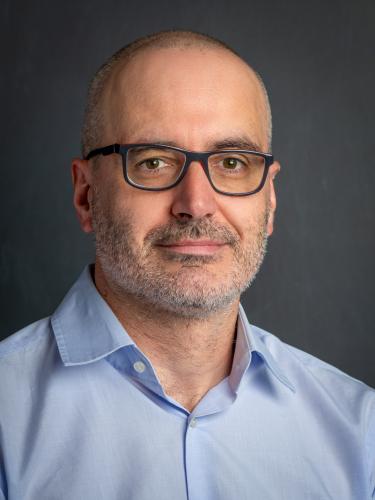
Javier Lezaun is Associate Professor in the School of Anthropology and Museum Ethnography and Director of the Institute for Science, Innovation and Society (InSIS).
Javier's research lies at the intersection of Anthropology and Science and Technology Studies (STS). His work explores the interplay of scientific and political change
Contact
Email: javier.lezaun@insis.ox.ac.uk
Telephone: +44 (0)1865 288943
I am an Anthropologist of Science, trained in Science and Technology Studies, and interested in the interplay between technological and political change. My research focuses on the multiple types of experimental activities through which we produce knowledge about the world, and what happens when we try to put that knowledge to use.
Over the last two decades, most of my work has taken place in the context of biomedical and global health research efforts, often in collaboration with scientists from other disciplines. This has included studies of the organization of pharmaceutical research and development, as in my ERC-funded project Bioproperty (Biomedical Research and the Future of Property Right), and work on scientific knowledge production during disease outbreaks, as in my research on the Zika emergency in Brazil.
A consistent focus of interest has been the attempt to control mosquitoes and the diseases they carry. I have worked with medical entomologists in a variety of projects in Tanzania, Burkina Faso Brazil and Venezuela, studying how they generate new insights about mosquitoes, and the challenges they face when they try to translate these insights into effective control tools. This work informs my book Pragmatic Vectors: Field Guide for a New Global Health, written with Ann Kelly and forthcoming with Duke University Press.
The most recent research project in this area concerns leishmaniasis – another disease transmitted by an insect vector. As part of the British Academy-funded project Diseased Landscapes, and in collaboration with colleagues at the Universidad de los Andes in Colombia, I am exploring the connections between leishmaniasis, agrarian systems, and armed conflict.
In recent years, my research has become increasingly concerned with climate change as a scientific and political problem. I am a co-Investigator in the Oxford Net Zero programme, and currently direct several research projects on inclusive net zero transitions. A key focus of my own work in this area is the development of carbon removal and sequestration technologies. Specifically, how emerging infrastructures to remove CO2 from the atmosphere can be made compatible with sustainable development goals, and contribute to an equitable phase out of fossil fuel extraction (rather than to its continuing expansion). At the moment this includes research on ocean-based methods of carbon sequestration, as in the European OceanNETs consortium, and new projects on soil and geological carbon sequestration in Mexico and Kenya.
I serve on a number of editorial and scientific advisory bodies, including UNESCO's International Bioethics Committee.